
The Watercolour Starter Kit (what you actually need…and what you don’t)

Affiliate Disclosure: Some of the links in this article are affiliate links. This means I may earn a small commission if you choose to make a purchase, at no extra cost to you. I only recommend products that I've personally used or genuinely believe are a good fit for beginners.
In this article you'll learn:
✓ What you need to buy as a beginner with watercolours
✓ What each material is for
✓ Which materials I recommend
✓ What you DON’T need to buy!
Walking into an art shop for the first time can feel overwhelming. There are dozens of paints, hundreds of brushes and shelves full of paper, and suddenly what seemed like a simple hobby feels confusing and very expensive! The good news is that you don't need very much to get started. In fact, there are a lot of benefits to painting with a small collection of good-quality materials than spending your money on every professional supply under the sun.
Here's what I'd recommend if you were starting today:
3-8 x paints (tubes or a beginner set)
1 x pad watercolour paper (cold-pressed, 300gsm)
3 x watercolour brushes (small, medium, large)
1 x white ceramic plate or palette
2 x water jars
Paper towel/cloth
That’s it. But let me elaborate.
Paints
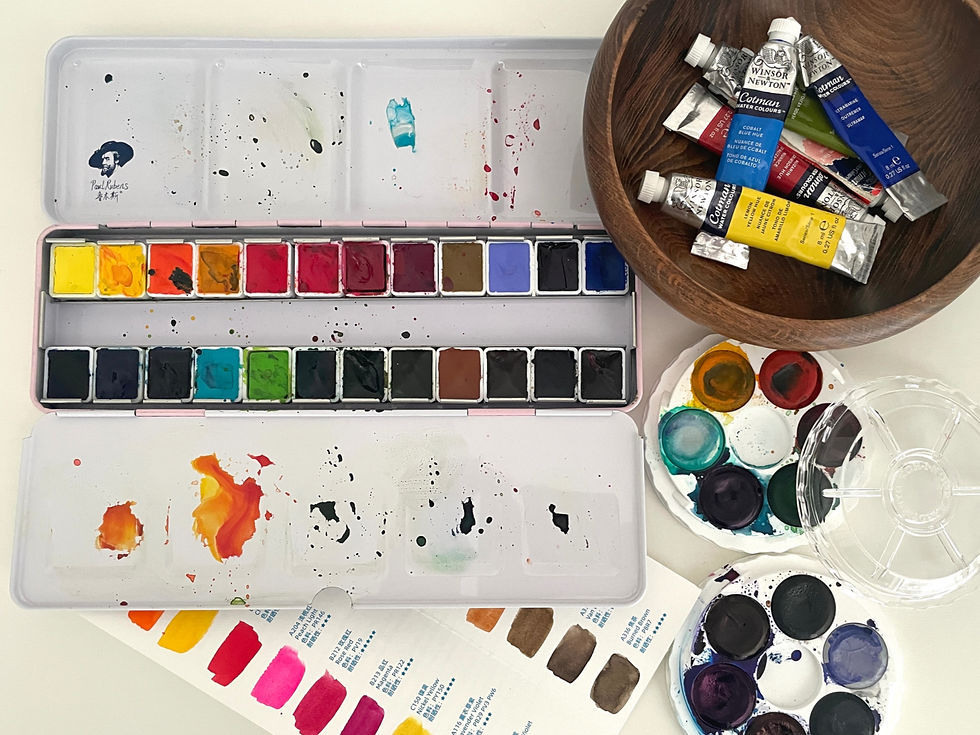
Watercolour paints come in the form of pans, tubes and also liquids in dropper bottles. All are excellent options but I’d recommend buying 3-8 tubes of paint that you can mix more colours from or a ready-made set of paint pans with a nice range of colours.
Here are some great brands for beginner watercolourists and hobby painters:
Winsor & Newton Cotmans paints (their student range) either a selection of tubes or pans.
Micador paint disks (ensure you’re purchasing one from their ‘for artists’ range)
Paul Rubens (This brand kindly sent me their 24 Floral Colors Watercolor Paint Set and I’ve really enjoyed painting with them for my art classes and lesson prep!)
Paper

Watercolour paper is essential for watercolour painting. Regular sketch paper or cartridge paper will spoil and tear and make you paints look very dull! If you're buying your very first watercolour paper, I'd recommend a pad of 300gsm cold-pressed paper. It's affordable and suitable for almost every beginner technique.
When looking at all of the options you will find that watercolour papers come in different weights (thickness) and different textures (hot-pressed, cold-pressed and rough). Hot-pressed means that the paper has essentially been ironed out to have a very smooth surface. Cold-pressed and rough papers still have texture and ‘tooth’ that you can see and feel. Hot-pressed paper is great for paintings needing fine detail and precision. Cold-pressed is great for everything else!
One other thing worth mentioning is that the best watercolour papers are made from 100% cotton. It is a bit more of an investment and is certainly something you can work up to, but if you like to do lots of layering and glazing it is great to upgrade to 100% cotton sooner rather than later.
Here are some great midrange brands for learning watercolours on:
Canson Montval watercolour paper
Derwent Academy watercolour paper
Fabriano 25% cotton paper (their student range)
MEEDEN 100% cotton watercolour paper (more affordable than other 100% cotton papers. They even have a 3 in 1 pad that has cold-pressed, hot-pressed and rough textured paper all in the one pad! A great way to sample the options. Use my discount code LAURENMAYSK at checkout to get 12% off your purchase.)
Brushes

Out of paints, paper and brushes, it is my opinion that the first two are where you should prioritise your budget spend. Obviously, don’t go out and buy the cheapest brushes that you can find. You still need to select brushes that are recommended for watercolour. However, so long as the brush can hold a decent amount of paint and has a feel to it that you enjoy I think you can create beautiful work with very affordable, synthetic bushes. It is also just a matter of getting used to the feel of your brushes and how to get the best results from them.
In terms of size and shape I find a round brush with a fine tip to be the most versatile. Start off by buying a small, medium and large size from the range at your local art shop and see which size you find easiest to work with. It depends on your painting process, the scale you like to paint in and also your skill and control with a brush that will dictate what sizes work best for you.
Brush recommendation:
MEEDEN professional watercolour brushes- I really enjoy the feel of these brushes and they are a much more affordable option than my usual sable hair brushes. The hold a LOT of paint/water, have a fine, pointed tip and great springy feel. Again, use my discount code LAURENMAYSK at checkout to get 12% off your purchase if you'd like to try these brushes too!
Born round taklon watercolour brushes- Just from Officeworks! We use these brushes in my workshops and they work great!
Palette:

You need a palette to mix your paints on. You know what I use? A 50c white ceramic dinner plate. I squeeze a little of each of my colours around the rim of the plate (in the order of a colour wheel!) and let all my colours mix and mingle in the middle of the plate. Easy peasy!
Whatever you use, make sure it is white. Otherwise, the colour of the plate will interfere with your ability to accurately judge the colours you are mixing.
A couple more essentials…
Once you’ve got your paints, paper and brushes you’re almost ready. But you know what watercolours need? Water. Have two water containers at the ready whenever you paint (one for cleaning your brushes, one for painting with). You also need some cloth or paper towel on hand to help you control the amount of water that you have on your brush.
What you don’t need (yet, or maybe EVER??):
Every single colour in the paint isle
Every size and shape brush
A fancy palette with a hundred little wells
Expensive brush holders
The most expensive, professional materials you can find
Masking fluids (unless you’re curious)
Watercolour mediums and additives (I never use these)
Brush cleaning products (water works fine!)
Keep in mind that every brand/range of watercolour materials will work and feel at least a little different. It can take a little getting used to the feel of a new brush or how your paint settles into different papers. Give yourself a some time and practise to get used to new products. And if you still aren’t getting the results that you want then perhaps it’s time to try out a new brand or upgrade your paint or paper.
Your painting skills will grow much faster than your collection of art supplies. Start simple, enjoy the process, and only upgrade your materials when you begin to notice their limitations—not because you think you "should.”
Want a handy checklist?
If you're putting together your first botanical art kit, I've created a printable checklist, including all of the materials above, to help you keep track of everything you'll need to collect. Click HERE to go to my Learning Resources page where you can get the checklist.
I'll also send you occasional botanical art tips, resources and updates about upcoming classes and tutorials.
Ready to learn more?
This Starter Kit is the first step in learning watercolour painting. I'll be adding more resources here soon, covering everything from setting up your workspace and transferring your drawing to colour mixing, painting techniques and more.
In the meantime, you can join my mailing list to hear when new tutorials and resources are available.


Comments